By Salam Hanadani in Hawraman, Iraqi Kurdistan //
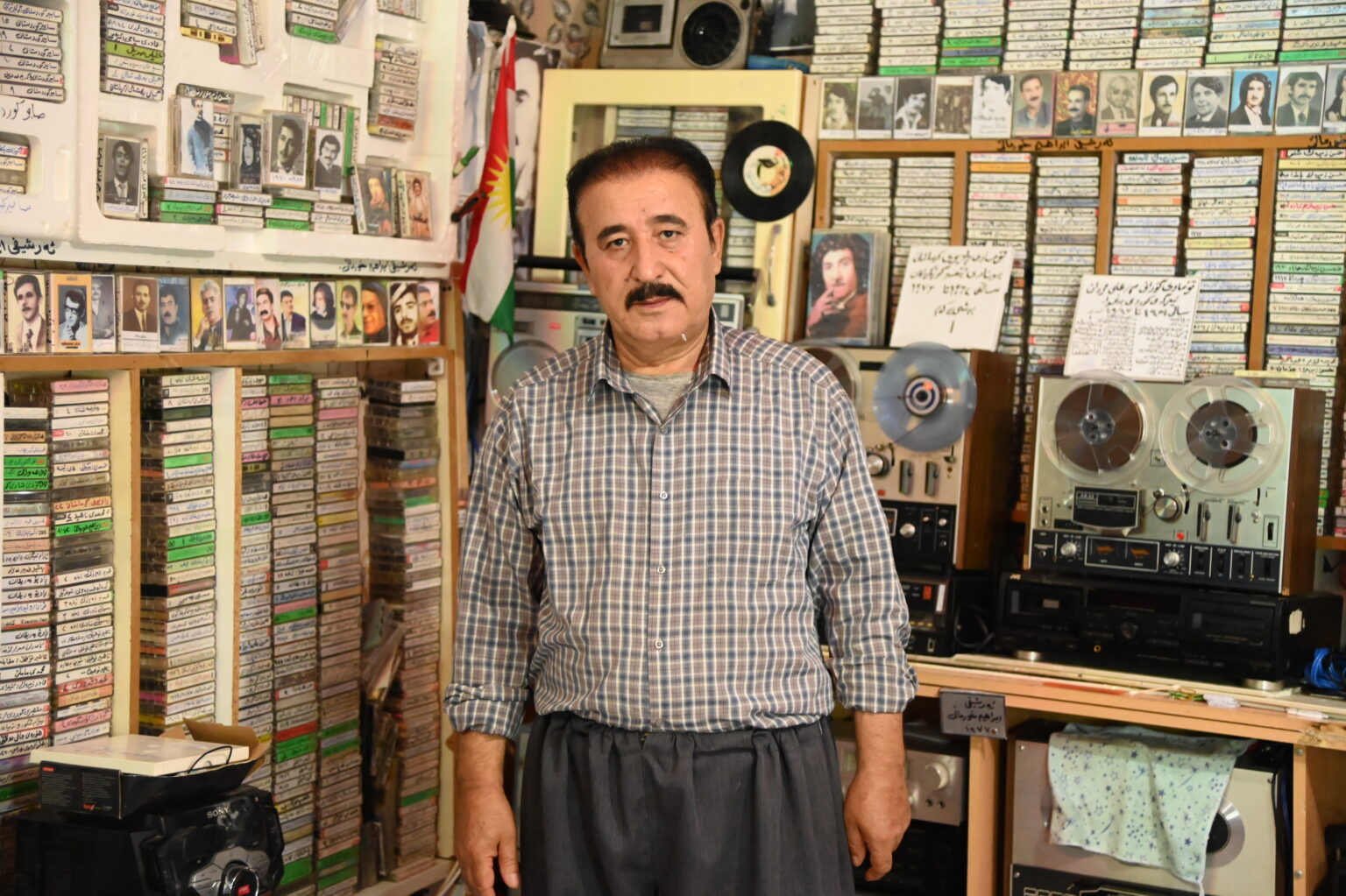
The moment the door opens, sound pours out. Melodies drift, notes are carried from a distant era, and shelves are crowded with cassette tapes and aging recorders, a vast musical memory that preserves decades of Kurdish artistic heritage.
At the centre of this musical world is Ibrahim Ali, known locally as Ibrahim Khormaly. He has devoted more than 40 years to collecting and safeguarding Kurdish songs.
Ali says that entering this room gives him a feeling unlike any other. “Whenever I sit here, I feel as if the whole world belongs to me,” he says. “This archive is part of my life and I will never abandon it.”
The library holds thousands of songs from Kurdish-majority areas in Iran and Iraq and also includes recordings by Arab artists. The collection includes works by major figures who shaped Kurdish musical identity.
There are more than 8,000 cassette tapes containing roughly 56,000 songs, with the oldest recording dating back to 1945.
These sit alongside nearly 20 different types of vintage audio devices, some of them more than 50 years old. Ali can trace the evolution of audio technology, from early tape machines to record players, reel‑to‑reel recorders, cassettes, CDs, DVDs and finally smartphones. He has collected nearly every device, except the world’s earliest recording machine, which he still hopes to obtain.
The archive also includes a rare collection of video tapes containing Kurdish and Arab series and dramas that Ali recorded directly from television. There are many from the 1980s and many that would now be impossible to find.
Despite working full‑time as a police officer, nearly all of Ali’s free time is spent in here, taking care of the archive. After his work shift ends, he cleans the old devices, organizes the tapes and listens to the music.
Every tape is labelled with the artist’s name, recording date and location, ensuring the information can also be accessed by later generations.
For Ali, this is a lifelong mission that began in his childhood.
Building the archive was far from easy. Some tapes and devices were gifts, others he purchased himself. One device alone cost him about IQD600,000 ($457).
Despite more than four decades of work on the archive, Ali says he has never received support or even a visit from any official institution, even though his archive represents a vital part of Kurdish cultural heritage.
With the rise of digital platforms, he has found new ways to disseminate the fruits of his labours. Many evenings, he hosts live listening sessions on social media, showcasing artists’ songs, recounting their stories, and introducing them to younger audiences who have never even listened to cassette tapes.
“I will preserve it here as long as I live,” Ali states proudly. “And I’ve taught my children how to maintain the devices and protect the tapes, so this place remains a centre for safeguarding artistic memory for generations to come.”
Archiving the songs of days gone by, he says, is all about preserving the memory of a people.
Your opinion on this topic is important to us, you can comment directly on our social media pages and you can contact us via email or WhatsApp.
Related articles