By Bwar Qadir in Sulaymaniyah //
In one of the quiet alleys of the Bakhtiari neighborhood in the Iraqi Kurdish city of Sulaymaniyah, Rankin Mahmoud, 61, complains that she must once again deal with thick black smoke and polluted air.
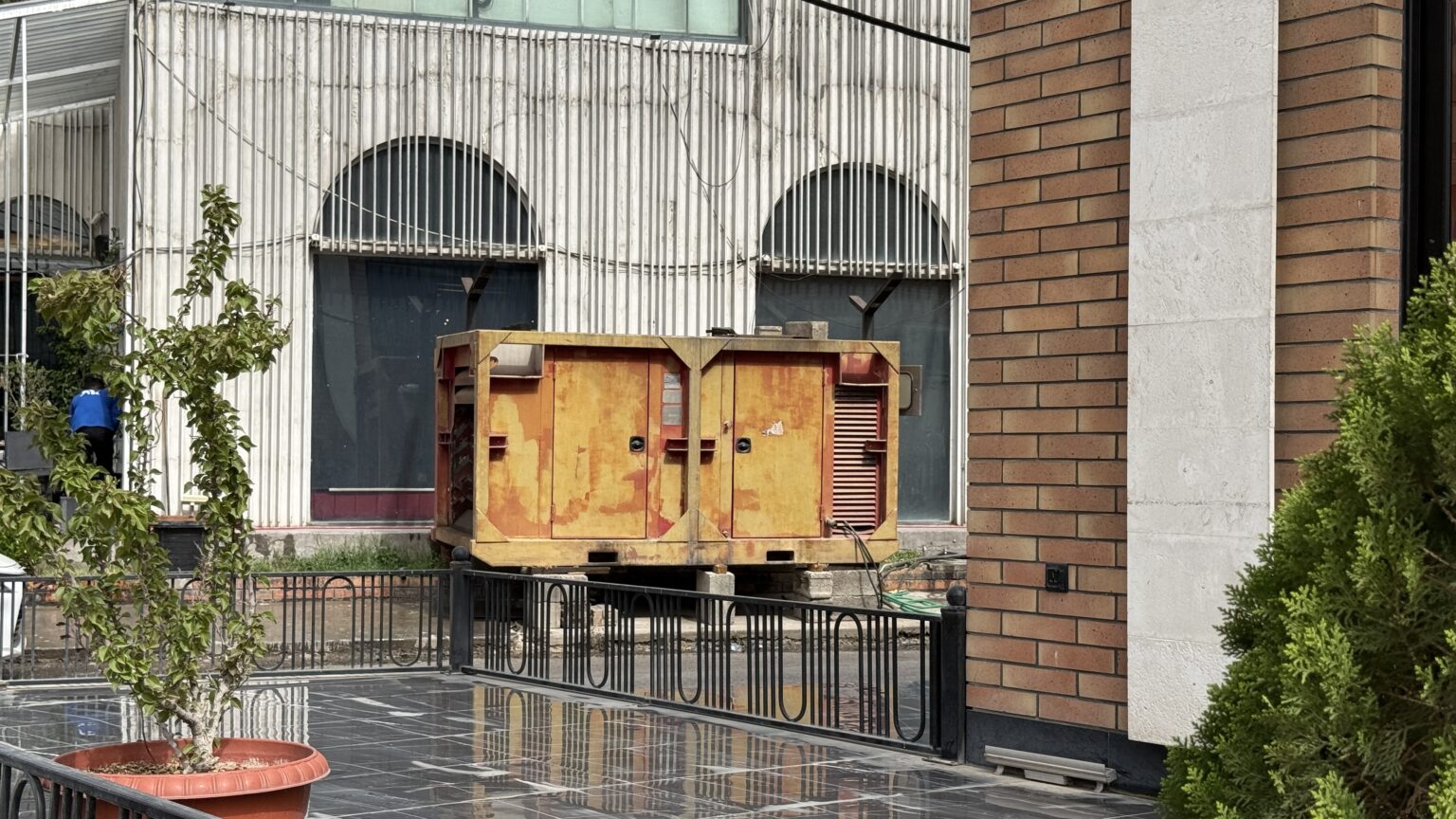
The pollution is due to the many large diesel-powered generators that provide electricity to private homes in the city when the state power supply fails. Like many other Iraqis, Mahmoud and her husband have both seen health issues because of the generator pollution, and she describes the fumes as “a silent killer.”
In mid-2025, she and her family had some hope the pollution might end. The Iraqi Kurdish authorities were working on improvements to their own power supply and planned to replace all private generators. They wanted to provide 24-hour power to all homes in the semi-autonomous, northern region of Iraqi Kurdistan.
And at first, the plan really worked – bringing Mahmoud and her family not just power, but also relief from the diesel fumes, generator noise and polluted air. But that all changed with the beginning of the US and Israeli war on Iran.
Before the war disrupted the energy sector, around 6,000 private generators had been shut down. That accounts for around 85% of all the generators in the area, which also radically reduced local emissions.
But when local power stations and gas fields were threatened during the war, authorities were forced to restart the generators to compensate for power shortages.
Koran Qader, head of the joint committees for Sulaymaniyah’s district administration, says turning the generators back on was unavoidable.
“We had no choice,” Qader says. “The threats to the Khor Mor oil and gas field reduced national electricity production.”
Environmental expert Rebin Samad Abdullah, a lecturer at Erbil Polytechnic University, says that just one hour of generator operation produces around the same pollution as 200 cars running simultaneously. The toxic particles released by the generators are a source of dangerous gases that can enter the bloodstream and lungs and cause chronic diseases, he says.
The US-Iran war has also caused other kinds of environmental damage. Drone and missile attacks — over 800, according to official sources — also lead to ecological destruction. When explosives detonate, they radiate a mixture of chemical agents, heavy metals and fine particulate matter that can remain in the air for hours or even days.
If there is prolonged exposure these can be carcinogenic, says Hawro Taha, a local oncologist. “These substances form deposits inside the lungs and attack human DNA, causing genetic mutations,” Taha explains. “That is precisely how cancer begins.”
Heavy metals from the explosives and the generator fuel also leak into the soil and groundwater when it rains.
Now that the generators have been turned on, even local horticulturalists are suffering. Many of the generators sit in local parks, further from residential housing.
“Generator smoke has dried out the pine trees,” Jalal Ali, a Sulaymaniyah farmer, notes. “People can’t sit in green areas anymore. Everyone avoids the parks because of the noise and the smell.”
As for Mahmoud, only 20 meters away from her living room, a generator is operating again, and so loud that two people in the room can barely hold a conversation. Smoke from the generator has stained her walls black.
“We can’t even stand in our yard,” Mahmoud says. “We can’t open the windows. We’re trapped and exhausted inside our own home.”
This report was published in cooperation with the Green Panther Project.
Your opinion on this topic is important to us, you can comment directly on our social media pages and you can contact us via email or WhatsApp.
Related articles