This summer, as temperatures in Baghdad approach 50 degrees Celsius yet again, life in the Iraqi capital begins to follow a different rhythm.
Streets that are usually crowded grow quieter during the hot afternoons, family visits are postponed until after dark, appointments are rescheduled, and residents search for ways to endure the long, increasingly heated summer.
But life certainly doesn’t stop. The city adapters. Locals improve to stay cool and combat the heat. Their distinctive sense of humor also helps navigate this uncomfortable annual reality.
Iraq’s Ministry of Environment reports that Iraq now has multiple days approaching 50 degrees Celsius every summer, instead of one or two as in the past. Iraq is also ranked among the countries most vulnerable to climate change.
The impact of climbing temperatures reflects on the city’s power grid. As temperatures climb, the demand for electricity for air conditioning and cooling devices rises sharply. That’s even as many neighbors don’t get a regular power supply from the national grid. This leaves residents struggling to make homes and workplaces bearable.
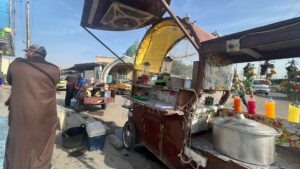
In Baghdad’s bustling Karrada district, the sound of private generators dominates around midday. The air carries the heat reflected off concrete buildings and asphalt roads. People move quickly between patches of shade, using umbrellas, cardboard or damp towels as makeshift protection.
“The heat in Baghdad is not just a temperature,” says Um Ahmed, 52, a commuter on a public minibus. The driver has hung a wet towel inside the vehicle and occasionally sprays water in an effort to cool the passengers. “It drains your energy and affects your mood. Sometimes it feels as though even the air dries out your throat. When electricity cuts happen, the suffering doubles. But what choice do we have? We still have to work.”
For Um Ahmed and thousands of others, avoiding outdoor activity is not an option. Government offices remain open and businesses continue operating regardless of the weather. For residents who can’t afford a private air-conditioned vehicle, moving around the city can become very difficult.
Despite the temperatures, one of Baghdad’s most enduring social rituals remains unchanged. In cafés across the city, customers continue drinking hot tea.
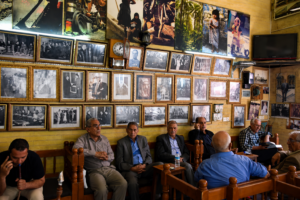
At a traditional café on Baghdad’s iconic Mutanabbi Street, Abu Ali, 45, sits with a glass of tea. Asked why he would choose a hot drink when it’s so warm outside, he just smiles.
“Visitors find it strange, but we believe tea helps balance the body’s temperature,” he says. “Drinking tea in the heat cools you from the inside. It’s part of our lifestyle. We would not stop drinking it, no matter how hot it gets.”
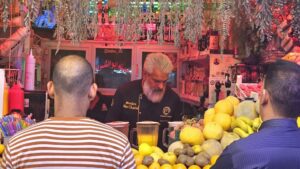
A few streets away, it’s a different story. There juice carts are surrounded by customers seeking ice-cold drinks. Fresh fruit juices, bottled water and crushed ice have become vital.
The sellers themselves work under difficult conditions. They are out in the open, surrounded by boxes of melting ice, bottles of water and small electric fans that do little to cool them. Despite the discomfort, business is good.
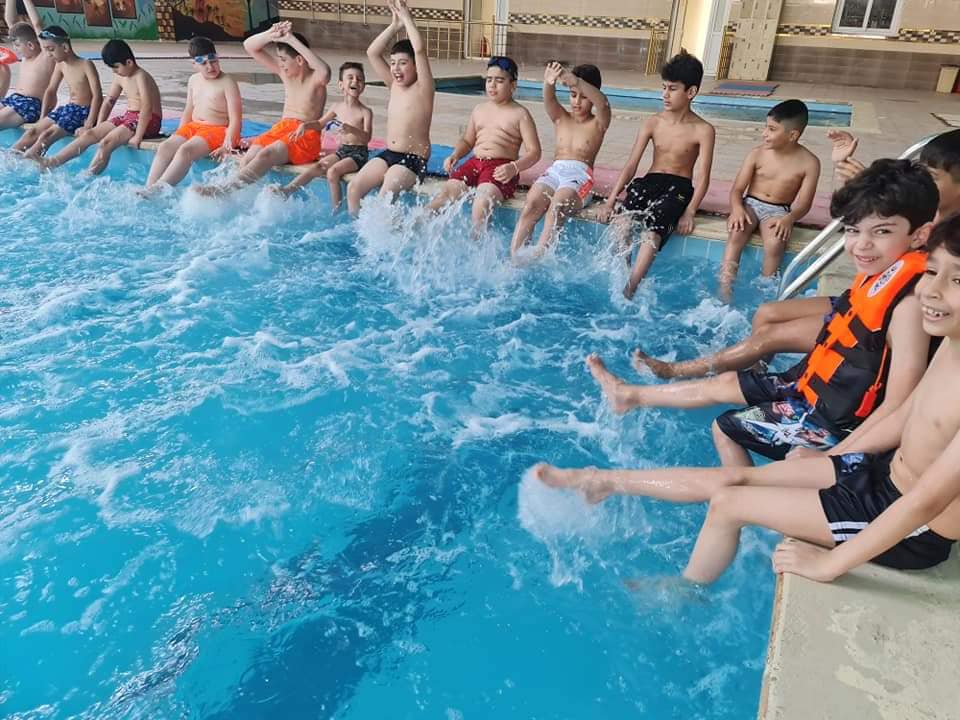
All across Baghdad, locals find other remedies for the summer heat too. Some spray water on sidewalks and in front of their homes during the late afternoon to cool surrounding surfaces. Shops position misting fans near entrances. Drivers keep damp towels and bottles of water in their vehicles. Swimming pools have also become a refuge.
Baghdad is home to a mix of public pools, private clubs and water parks. Facilities range from simple community pools offering basic services to larger recreational complexes with restaurants, water attractions and family entertainment. Admission prices generally go from IQD5,000 to IQD15,000 ($3.80 and $11.50), depending on the venue and available facilities.
“The children always want to go swimming during the summer,” says Haider Hassan, a 39-year-old father of three. “But it’s not only the cost of the tickets. You have transportation, food and drinks. The whole outing can cost more than IQD50,000 [around $38]. That’s why we only go once or twice a month.”
Unfortunately for some families even this is a luxury. Some children and teenagers go swimming in the Tigris River or in irrigation canals — that’s despite repeated warnings from local authorities about strong currents and unsafe locations.
Others simply place small plastic pools on rooftops or in courtyards, or the children cool off under a garden hose.
The contrast between families who can and cannot get to a swimming pool highlights another fact of life in Baghdad and elsewhere: Escaping the heat often depends on your financial means.
There’s also a gender divide. In the more conservative Iraqi society, men generally enjoy easier access to pools throughout the week while many women wait for female-only days or hours.
Another way to cope with the heat in Baghdad is humour. Social media platforms are brimming with jokes about melting asphalt, eggs frying on sidewalks and temperatures that are still unbearable well after midnight. Electricity shorts are a frequent subject of satire and sarcasm.
“If we don’t laugh about it, we’ll all go crazy,” says Omar, a 27-year-old university student. “The jokes we share online help us deal with the heat and the power cuts.”
As darkness falls and temperatures begin to fall, Baghdad slowly comes back to life. Families head to cafés, markets and riversides. Even after sunset, buildings are still hot from heat absorbed during the day and the constant hum of generators continues. Eventually, much later, the city will sleep, just waiting for another sunrise and for the mercury to start to climb.
Your opinion on this topic is important to us, you can comment directly on our social media pages and you can contact us via email or WhatsApp.
Related articles