By Salam Hanadni in Said Sadiq //
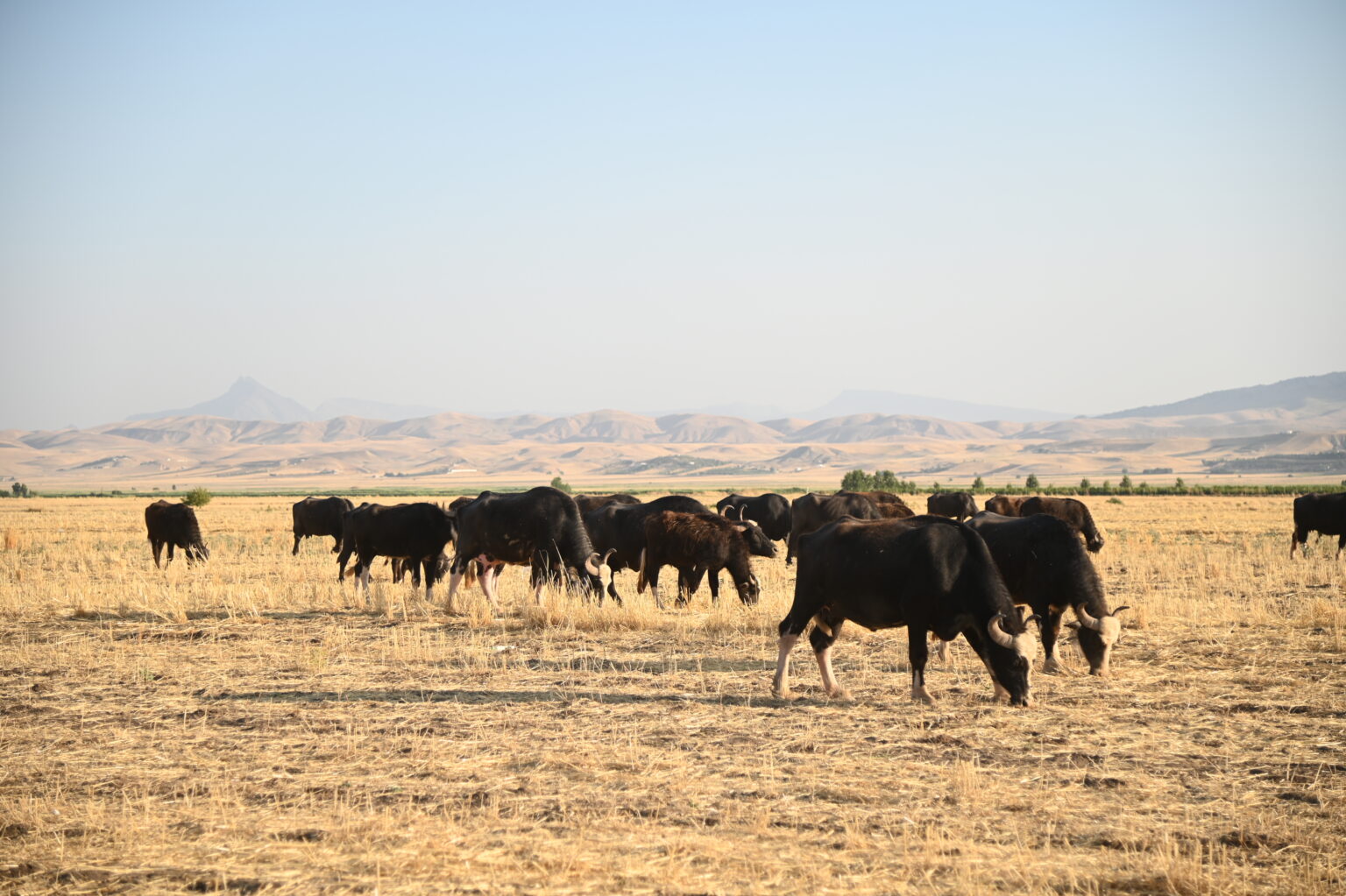
On the Shahrizor plains, near the city of Said Sadiq in northern Iraq, four families farm around 500 water buffaloes — no mean feat in a place where summer temperatures regularly hit 47 degrees Celsius.
Farming water buffalo is a very specific type of agriculture and requires a special environment and skills.
Every day, members of the farming families walk nearly 2 kilometers to reach their water buffalo, who are found grazing along the banks of the Tanjaro River. The river is essential for the animals in the summer months.
“In summer, we bring our buffalo here because of the river. We stay until the cold season begins, then return to areas closer to Said Sadiq,” Latif Mohammed, a buffalo herder with 15 years of experience, explains.
Under the blazing sun, the buffalo push into the river repeatedly, cooling their bodies; They thrive in wet, humid environments and depend on water to regulate their temperature. Despite their ability to adapt to different climates, access to water remains essential.
“When temperatures rise, the buffalo go into the river many times a day. At night, we keep them near the riverbank,” Mohammed says.
Buffalo herding is far less common in this part of Iraqi Kurdistan, Sulaymaniyah, compared to raising sheep, goats or cattle. The buffalo require abundant water, humid surroundings and specific care, which sees other farmers unwilling to take on the herds.
Water access, animal age, breed and quality of care all directly affect milk production.
Iraq’s buffalo are mostly of the Indian breed, thriving in riverine and marshy environments. The average Iraqi buffalo weighs around 500 kilograms although some grow even larger.
A buffalo pregnancy is long, over 300 days or somewhere between nine and 11 months. Most buffalo usually only have one calf at a time and that won’t reach maturity until somewhere between two and four years.
The job is tough but rewarding, says Kanaan Amin, another herder. “It’s not easy but business is good. Very few families in this region raise buffalo.”
According to Iraqi Kurdistan’s Ministry of Agriculture, buffalo herding has increased in recent years. While no official census exists, estimates suggest there are now around 8,000 buffalo in the region.
Buffalo can provide meat, milk and leather. Buffalo meat is sold by weight, with prices ranging between IQD6,000 and IQD8,000 ($4.60 to $6.10) per kilogram.
Each animal produces between 6 and 15 liters of milk a day. Herders milk the animals themselves and send part of the production to dairy factories in Sulaymaniyah, Said Sadiq and other cities in Iraqi Kurdistan.
Demand for buffalo milk, yogurt and the Iraqi specialty, geymar or kaymak (clotted cream) keeps rising. Buffalo milk is priced at around IQD3,000 ($2.30) per liter and geymar fetches about four times that.
Amin says marketing water buffalo products is not a problem. “Demand is high,” he explains. “Sometimes buffalo milk and geymar are even imported from other Iraqi cities. If more people in Kurdistan raise buffalo, it could become a strong source of income for the region.”
Currently only around 30 people benefit from water buffalo farming directly or indirectly, he estimates.
The farmers say the regional government could help strengthen the sector, by helping to provide more suitable grazing areas, water sources and veterinary support. Expanding buffalo numbers, they argue, would help meet local demand.
Your opinion on this topic is important to us, you can comment directly on our social media pages and you can contact us via email or WhatsApp.
Related articles