By Mahdi al-Saadi //
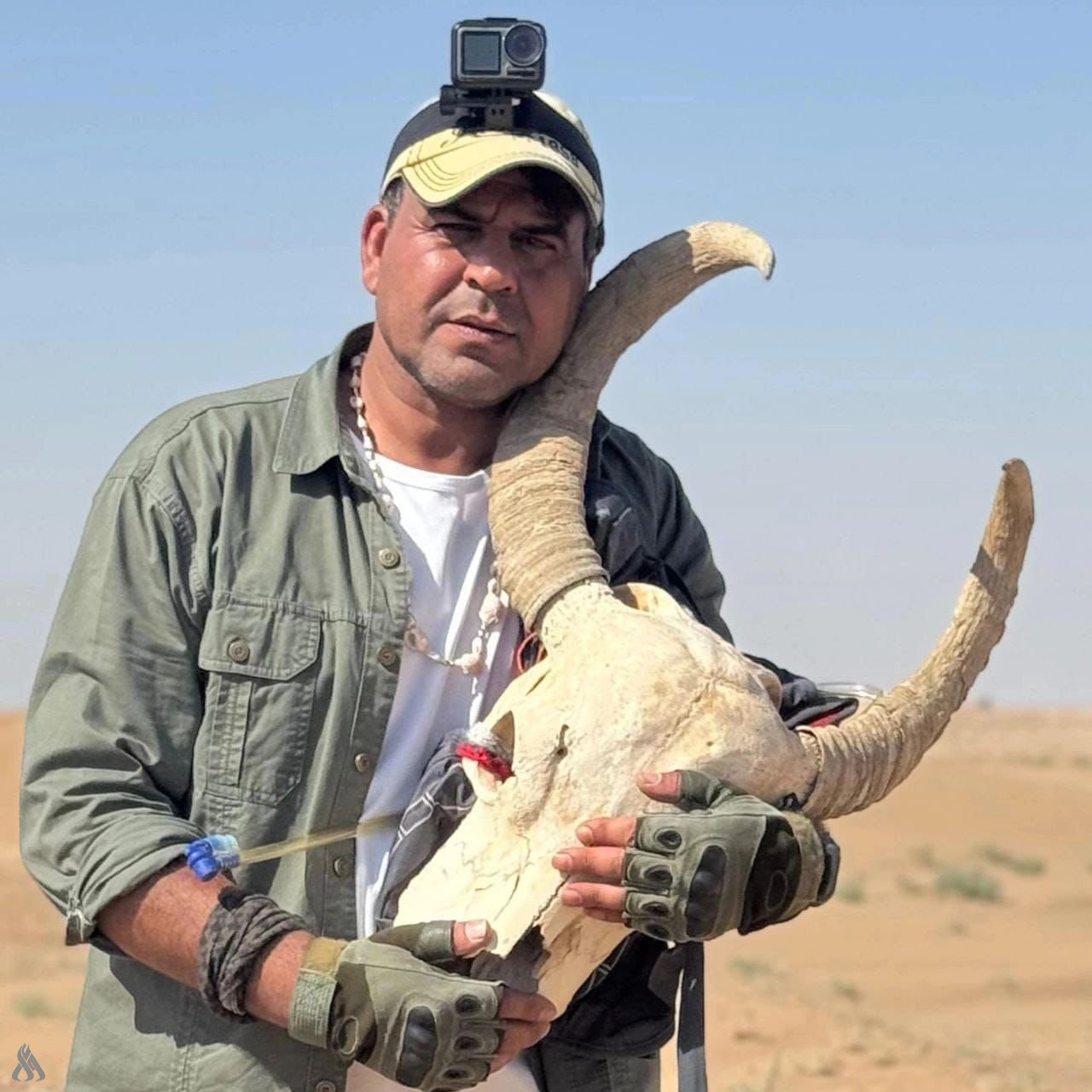
In the marshes of southern Iraq, local man Ahmed al-Saadi is known for carrying a buffalo skull around.
He lifts it high during protests, public gatherings and environmental campaigns in an attempt to remind observers what the lack of water is doing to Iraq’s distinctive wetlands and the creatures that live in them.
The environmental activist says he has even brought the skull to some religious events in the hopes of creating environmental awareness in spaces where such issues are rarely discussed.
The skull became a widely recognized symbol during a 2022 environmental campaign called “The Marshes Are Suffocating” during which al-Saadi and fellow activists printed a huge slogan in both Arabic and English. The organizers say the placard was 50 meters long and 3 meters wide. They used buffalo skulls to form the dots of the letters. One observer recounted how al-Saadi started to cry as he placed the skulls.
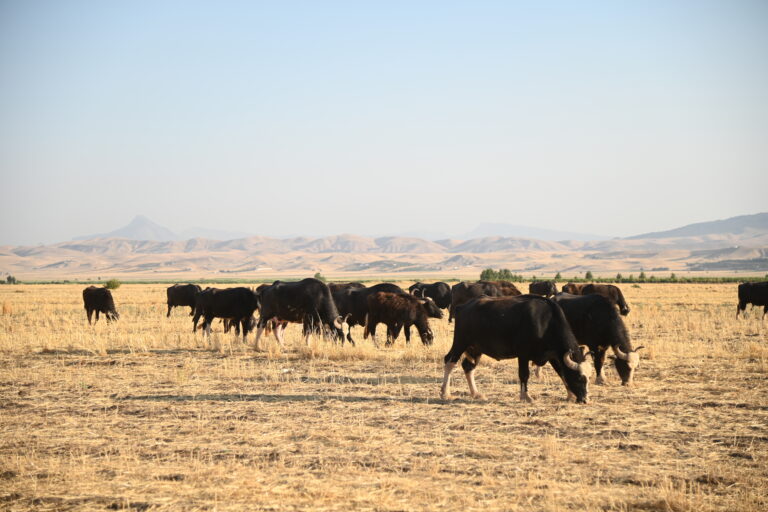
Iraq’s southern wetlands, often called the Mesopotamian marshes, are one of the world’s most endangered ecosystems. Once thought to have contained some of the biblical Garden of Eden, the wetlands were named a protected UNESCO world heritage site in 2016. UNESCO describes the marshes as one of the largest inland delta systems in the world, one which hosts both rich biodiversity and human heritage.
In 2025, the World Heritage Committee, which administers world heritage acknowledgments, expressed concern about the fact that water levels in the marshlands had fallen for the fifth consecutive year.
And water shortages do not only harm wildlife, they also threaten the livelihoods of families who depend on raising animals there. In July 2026, the UN Food and Agriculture Organization said it had to provide feed to 3,300 livestock breeders in Basra, Maysan and Dhi Qar in order to help them keep their animals alive as climate change alters the environment.
Al‑Saadi grew up in Maysan, surrounded by a landscape that blends marshes, swamps, open plains and hills.
“Since childhood, I loved birds and animals and I tried to get close to them, and learn about the plants around me,” he said. “After school, I spent most of my time in nearby swamps because they were full of different plants, birds and animals.”
After his expanding explorations, he began leading camping trips and guiding visitors and has also worked for media outlets in Iraq to document the region’s wildlife.
“Maysan is a large province with diverse terrain,” he says. “It holds many environmental secrets. It needs someone who understands its hidden corners and can show them to people who may know nothing about its wealth.”
The fact that he is always in the wetlands has earned him a nickname, “the marsh bird.” But for al-Saadi, his work and his photography is not necessarily always a celebration of nature’s beauty, it is also a record of its decline.
“My dream has always been to show both the positive and negative aspects of the environment so we can protect it,” he explains.
Al-Saadi is part of a network of environmental activists in Maysan and colleague Murtaba al-Janoubi praises him as a true “son of the marshes.”
“His constant stand on environmental issues and his demands for the rights of Maysan’s people reflect his deep concern for his environment and his province,” al-Junaibi states.
Al-Saadi has also helped to rehabilitate injured wildlife so they can return to their natural habitat. This includes a female wolf he named Jazia.
Another of his initiatives is named “The Little Adventurer” and in this project, Al-Saadi school takes children and their parents out into nature in eastern Maysan, introducing them to the animals and plants there.
“Ahmed has started preparing a new generation that carries his spirit of adventure and that has learned about the environment and animals around them” al-Junaibi explains. “It takes children into nature to develop their love for the environment.”
Over recent years, al-Saadi has also directed his appeals to prime ministers, environment ministers and local officials.
“I sent environmental appeals to the highest levels of authority,” al-Saadi recounts. “Some were answered, but most received promises that never materialized.”
Nasir Baqir, an activist with the Tigris River Protectors group, says all too often environmental activism ends up being acted out in workshops or training that ends up having no, or very limited, impact on the ground.
Baqir notes that local associations like his and activities by people like al-Saadi cannot replace the government and official responsibility to manage water resources and protect the marshes. Instead they must document, pressure and encourage community involvement, Baqir says.
Al-Saadi is fully aware that he himself cannot release water into the marshes or change government policy.
“I’m satisfied with what I’ve done for my city,” says the activist, who continues to carry the buffalo skull because it gives his loss a visible shape. “And I’m grateful to the people who stood with me in demanding the rights of our province. I hope officials pay attention and I will continue demanding these rights until they are achieved.”
Your opinion on this topic is important to us, you can comment directly on our social media pages and you can contact us via email or WhatsApp.
Related articles