By Salam Hanehdi //
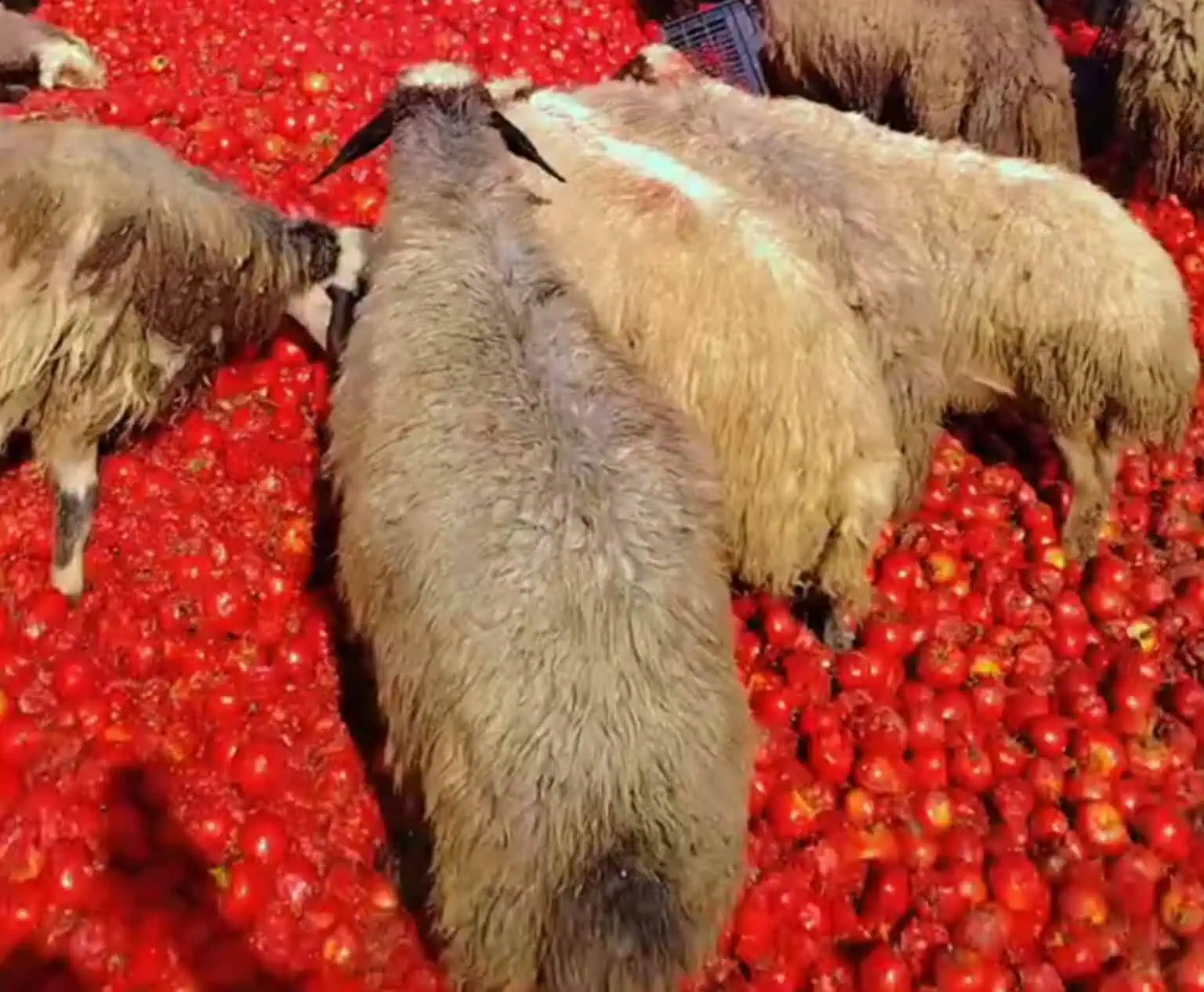
A bumper tomato harvest would normally be great news for farmers in the semiautonomous northern region of Iraqi Kurdistan. But this year falling prices and limited market access are leaving some farmers short of cash and resorting to feeding portions of their bumper crop to livestock or just leaving it to rot.
The farmers in the Penjwen district in Iraqi Kurdistan usually start work early, around 5 a.m., with the harvest ready for transport to wholesale markets by around 8 a.m. But this year, starting before sunrise doesn’t guarantee them buyers who can cover their costs.
Bakr Penjweni, a farmer in this area, says tomatoes are selling for between $0.13 and $0.33 per kilogram at wholesale, with the price range dependent on quality and condition.
Around 21 tomato varieties are cultivated across Iraqi Kurdistan and their characteristics and uses vary, with some suitable for eating fresh and others for producing sauces and pastes.
But when production rises and demand and processing capacity can’t absorb everything that is available, then prices fall.
And currently prices are simply not high enough to cover costs, Penjweni complains.
“The costs of seeds, ploughing the land, pesticides, irrigation, workers and transporting the crop to the market are much higher than the money we receive,” Penjweni explains.
Penjweni says he even rented two additional plots to plant tomatoes this season, alongside his own land. But the decision has ultimately left him with losses of about $2,640.
At $0.13 per kilogram, it doesn’t make economic sense to market all of his produce, the farmer explains. So he simply threw some tomatoes away and fed some to his animals.
Other farmers are facing similar problems. Wholesale markets are seeing large volumes, low prices and fewer buyers.
Some of the farmers have even left their tomatoes to rot on the vine. Picking produce that cannot be sold means spending on labour and transportation without knowing whether those costs can be covered.
A tomato paste factory in nearby Sharazur has provided an alternative for some of the excess crop.
Peron Mohammed, a supervisor at the Sharazur tomato paste factory, says the facility receives around 150 tonnes of tomatoes daily. The tomatoes are processed, packaged and sold in markets across Iraq and Iraqi Kurdistan under two names, Sharazur Paste and Baghdad Paste.
The factory provides something of a reprieve for farmers with too many tomatoes but it can’t take all the surplus fruits. So some of the crop is also sent to markets in central and southern Iraq as farmers search for customers beyond Iraqi Kurdistan.
Qaraman Qadir, spokesperson for the regional Ministry of Agriculture, says the region produces about 400,000 tonnes of tomatoes annually. But at the same time, there are also illegally imported tomatoes entering local markets, he notes. That puts even more pressure on local farmers.
The regional government is trying to protect local production by banning tomato imports during growing season. The annual ban runs from May 15 to November 15, Qadir says. The measure is intended to give locally grown tomatoes more of a chance.
Even so, farmers like Penjweni say they’re still struggling.
Your opinion on this topic is important to us, you can comment directly on our social media pages and you can contact us via email or WhatsApp.
Related articles