By Salam Handani in Halabja //
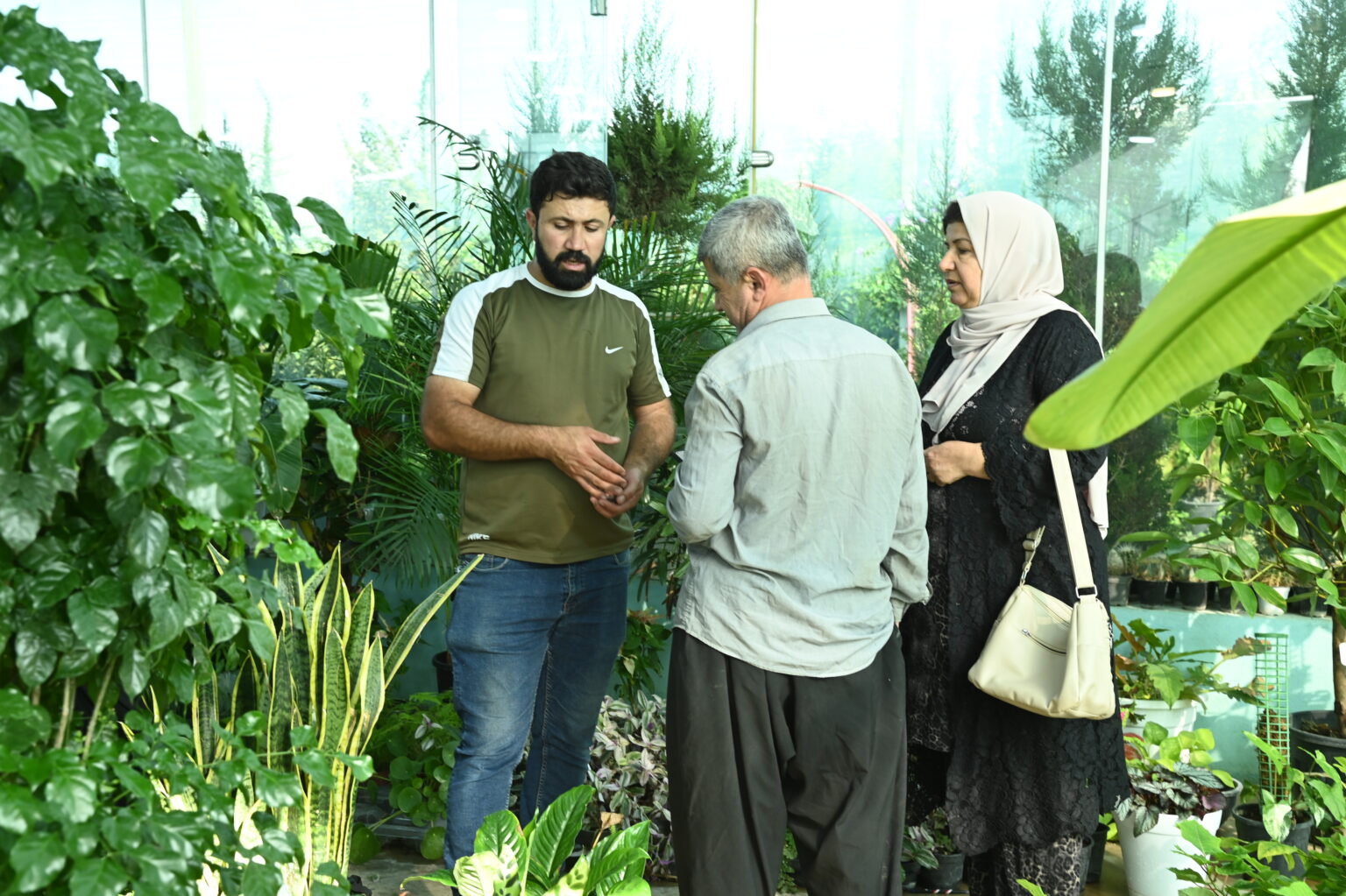
At 8 a.m. Zahia Jamal arrives at her family’s nursery in the northern part of Halabja, a city in the semiautonomous northern region of Iraqi Kurdistan.
She starts her day watering plants and inspecting flowers while her brother Barwa takes care of other jobs around the nursery. It is a routine the family has been following for over 17 years.
“I come here every morning to water the flowers and take care of them,” Jamal says. “Most of the time I work with my brother. My father and mother are also here much of the time but now we handle most of the day-to-day work.”
The siblings’ father started the business with only a few hundred seedlings. Since then, the nursery has grown and now produces between 50,000 and 60,000 seedlings a year. The Barwa Nursery and Garden stocks around 850 varieties of seedlings, trees and flowers.
This kind of business — the production of seedlings, trees and ornamental plants — is among those being promoted by authorities in Iraqi Kurdistan as an investment opportunity.
The regional Board of Investment lists seedling production, tree and forestry nurseries and ornamental plants among agricultural investment opportunities here.
Iraq’s agriculture sector is actually very dependent on imports, particularly from Iran and Turkey. A 2024 study of the agricultural sector in Iraq and Iraqi Kurdistan, commissioned by the Dutch consulate in Erbil, identified opportunities to expand the domestic production of flowers, ornamental plants and seedlings.
That’s what is happening at the Barwa nursery. The family import selected plants, then propagate them in Halabja in order to produce larger quantities at lower cost.
Their plants have come from a variety of different countries, including the Netherlands, Turkey and Indonesia.
Some imported specimens initially cost about $200 for a single plant but after propagating them and producing hundreds of seedlings, the nursery is able to sell individual plants for between $13 and $16. Raspberries, blueberries and blackberries are examples of this.
Prices for the plants vary considerably, depending on species, age and size. Some plants start at around $0.70 while larger or rarer specimens can cost significantly more. For example, some Washingtonia, or fan, palms can sell for as much as $1,500.
Jamal studied agriculture and thanks to the family business was able to work in her chosen field.
“My work is within my specialization and I have good experience,” she says. “I love my work very much.”
Caring for plants is obviously so much more than just watering them, Jamal explains. It begins with selecting appropriate soil and fertilizer and includes cleaning, temperature control and ensuring that each species receives the right amount of water and sunlight.
The young woman compares the process to raising a child that requires constant attention. Even relatively small differences in temperature or watering can affect the growth of some plants.
Even though the nursery is named after Jamal’s brother, Barwa, he actually studied art.
He takes care of management duties. “My sister and I work here every day for more than 10 hours,” he notes.
As the nursery has expanded, so too has the range of customers.
Some come looking for houseplants or flowers while others buy seedlings and trees for gardens and outdoor spaces. The family also offers their customers advice on planting techniques, soil and fertilizer selection, watering schedules and exposure to sunlight.
“The nursery is rich in different varieties of flowers and trees and it has become a trusted place,” one of their customers Mohammed Saeed says. “Whatever kind of flower or tree you need, you will find many varieties here.”
The Barwa nursery’s success is also part of a larger picture in Halabja and Iraq, an ongoing attempt by locals to produce some of the things that typically come from abroad.
Plant production is expanding elsewhere in Halabja too. In 2025, a project was announced in the Khurmal district that intends to produce 25,000 flowers and seedlings and support green spaces in the province.
Your opinion on this topic is important to us, you can comment directly on our social media pages and you can contact us via email or WhatsApp.
Related articles