By Alaa Koli //
In Iraq’s southern marshes, farmers are confronting a growing challenge that is changing daily life and agriculture: Wild pigs.
There has been an increase in wild pig populations and, along with that, their potentially destructive behaviour. What was once a manageable animal in the wetlands has become a nightly threat to crops, orchards and livelihoods, residents say.
For Abu Akram, a 64-year-old farmer in the Maysan marshes, pigs are persistent and exhausting.
Each evening, he reinforces the fence around his date‑palm orchard with barbed wire, hoping to keep them out. Despite this, the animals dig underneath the barriers.
“They come every night,” he says. “They dig, they enter, and they destroy whatever they find.”
He describes them as “rogue gangs” that move through farms at sunset, rooting in the soil, chewing crops up and leaving behind significant damage.
There was a time when the wild pigs were much less aggressive and intrusive, residents here recall.
In the 1970s, the pigs tended to stay in the swampy areas and were rarely approached homes or farmland. There were fewer of them and they seemed more cautious. Today, farmers say, the animals have become bolder, more numerous and more destructive. They believe this shift is partly due to drought conditions and environmental changes that have pushed wildlife closer to human-dominated areas.
Eyad Sabri, director of agriculture in the Chibayish district, says there are no official statistics for the pig population in the marshes. But he does say that anecdotal evidence and observations out in the field indicate there’s been a significant increase.
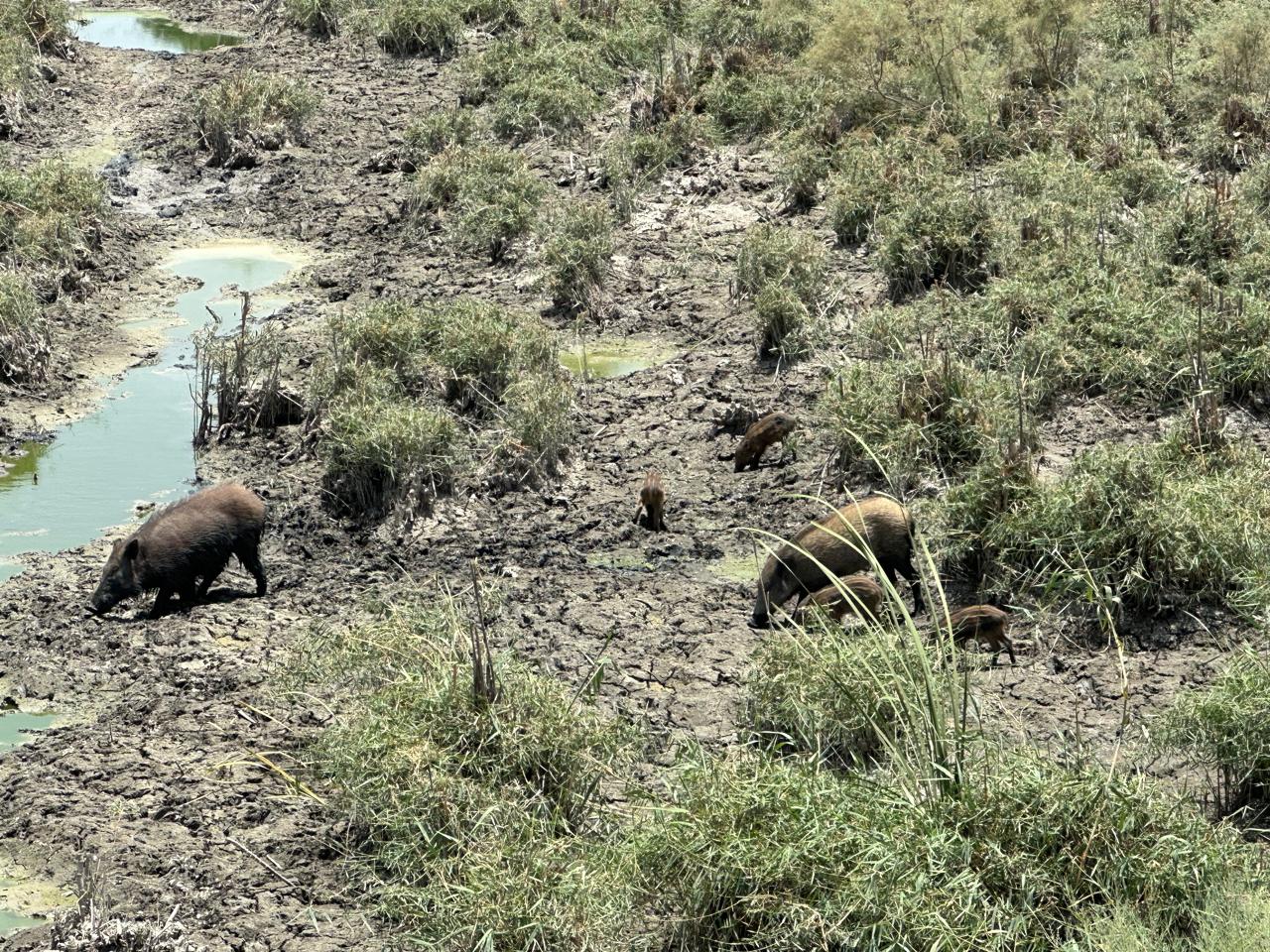
There are two types of pigs in the area, Sabri says: Gray pigs, which are larger and considered more dangerous to humans and crops; and black pigs, of which there are fewer. These are mainly known for becoming aggressive if they are threatened.
There is no organized hunting program to eradicate pigs either, Sabri explains. Farmers try to protect their crops using electrified or barbed wire fences and traps. They may also try to hunt the pigs. However most of this doesn’t stop the pigs, Sabri complains.
“They still damage fodder crops, vegetables and even young date palms,” he says. “Farmers are struggling.”
Another farmer working in the area, Abu Ahmed, believes there are thousands of wild pigs in the area now.
He says the population has grown noticeably in recent years, particularly during periods of drought. “They come in groups,” he explains. “Nine or ten pigs in each herd, usually led by a large male. They wait for the right moment to attack the crops.”
Pigs destroyed his rice and wheat fields last year, causing significant financial losses. Even his date palms have been targeted. “They wait until the dates ripen,” he notes. “Then they climb the trees and eat the entire crop.”
Wild pigs have been part of the marsh’s ecosystem for thousands of years.
Amer Abdul-Razzaq, an archaeological researcher, says ancient Iraqis were some of the first humans to domesticate pigs in southern Iraq, keeping them in enclosures known as “zariba.” In Babylonian and Assyrian traditions, pigs were slaughtered during new year rituals.
Abdul-Razzaq has found pig sculptures at archaeological sites and other clay tablets also reference pigs in Sumerian civilization.
Pigs are generally shy but also capable of aggressive behavior, environmental activist Raad al-Asadi, head of the Chibayish Ecotourism Organization, says. “A pig rarely initiates harm against humans, but its behavior can become violent, especially when threatened.”
Al-Asadi agrees with the farmers about their estimates of the pig population being thousands strong.
The fact that there are so many more means they are more often seen in residential areas and there are also more pig-related incidents on local roads. “They appear in multiple locations now,” he says. “They get hit by cars and sometimes cause accidents.”
Al-Asadi says wildlife surveys in the marshes have historically focused on birds rather than mammals, which leaves researchers with some gaps in understanding pig populations and their behavior.
But he believes now is the right time to organize efforts to potentially cull the pig population despite the clear value to the environment here. “They clean the marshes by eating waste and remains,” the environmentalist explains. “But their uncontrolled growth can also harm the ecosystem.”
The Iraqi marshes cover about 17% of the country and host rare species and much biodiversity. They serve as a critical habitat for migratory birds and support sectors such as buffalo herding, fishing and agriculture.
But any organized culls must be carefully organized, al-Asadi argues. Buffalo are easily frightened and migratory birds may abandon areas where there’s a lot of gunfire.
It remains something of a conundrum for locals. Pigs coexist with buffaloes and are essential to the ecosystem.
Removing them entirely would damage the delicate ecological balance in the marshes. Which is why local farmers face a difficult question: how to protect their crops without disrupting an ecosystem that has relied on pigs for centuries?
Your opinion on this topic is important to us, you can comment directly on our social media pages and you can contact us via email or WhatsApp.
Related articles