By Saad Nadhim in Basra //
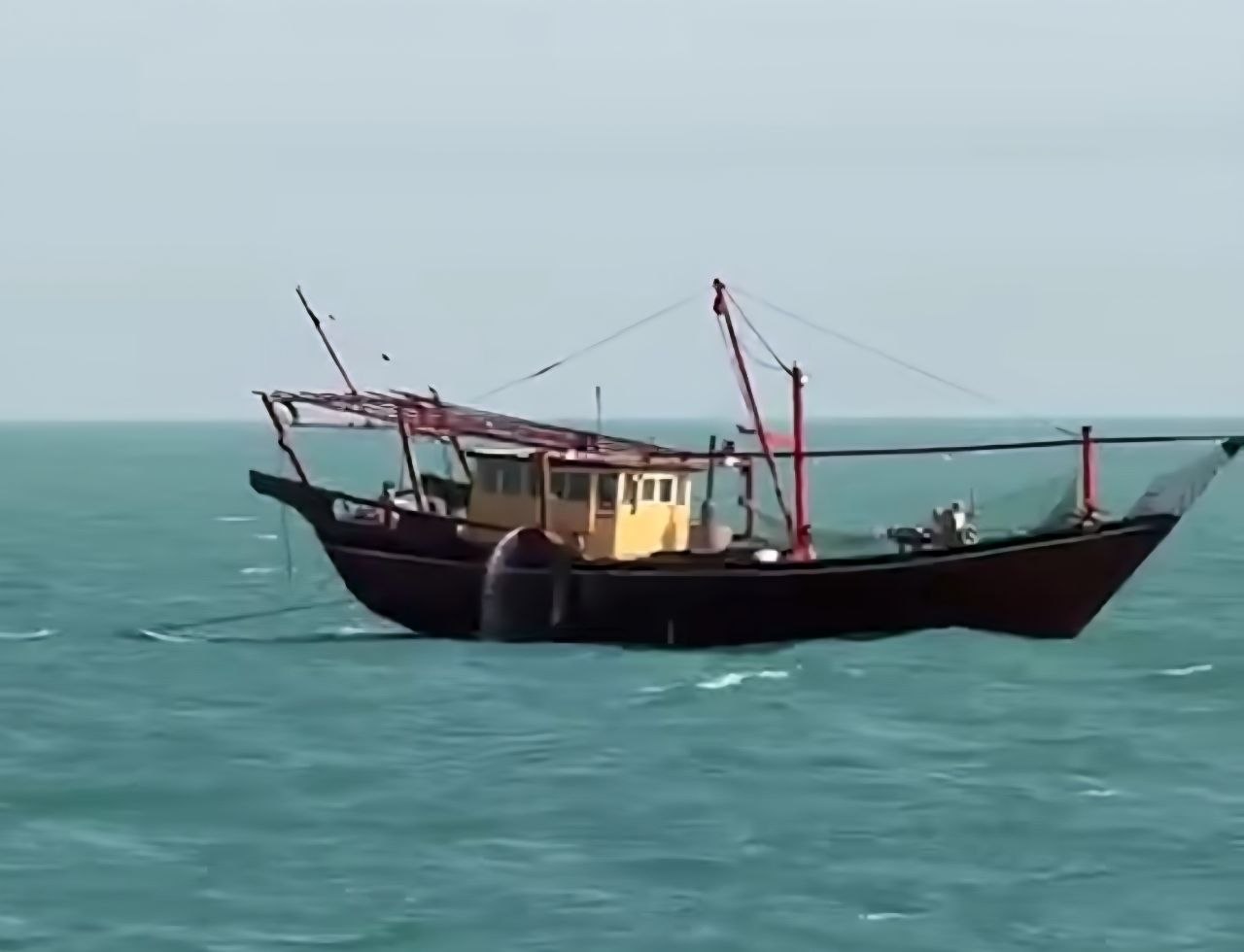
Before dawn breaks over Iraq’s southern coastline, fisherman Ahmed al-Janoubi is already preparing for another journey into the Gulf. At 53, the father of five has spent most of his life at sea, in a profession his family has undertaken for generations.
But these days, every fishing trip carries a lot more uncertainty. For fishermen in southern Iraq, the Gulf has become a space where economic pressures, territorial disputes and regional security concerns meet.
Along Iraq’s narrow maritime frontier, fishermen from Al Faw, a peninsula in southern Iraq, say they face increased challenges that go well beyond the normal hardships of working on the sea.
Recently there have been more confrontations with Kuwaiti coast guard patrols. They are also dealing with rising costs and the impacts of regional instability that stretch from the Gulf to the Strait of Hormuz.
On the eve of this fishing trip, al-Janoubi sits outside his modest home surrounded by nets, fuel containers and provisions that must sustain him and his crew for up to 10 days at sea. Inside his family prepares for his departure.
“But every trip now comes with fear,” al-Janoubi says. A veteran sea captain, he says Iraqi fishermen now frequently encounter Kuwaiti patrols while operating in what they consider to be Iraqi waters. According to him, crews are sometimes forced to abandon fishing grounds and retreat, to avoid escalation, which risks their livelihoods and their own safety.
The situation is compounded by allegations of equipment confiscation, detentions and net damage. Local fishing trips could end with a profitable catch or with financial losses severe enough to erase weeks of work.
Such reports have drawn national attention.
Iraqi parliamentarian Alaa al-Haidari has raised concerns over attacks on fishermen, citing shootings and injuries near maritime areas used by Iraqi fishing crews. He has called on the government to pursue diplomatic and legal measures to ensure Iraqis are protected.
Another Basra-based politician, Hussein al-Darraji, alleges that a Kuwaiti patrol entered Iraqi territorial waters and opened fire on fishermen. Al-Darraji criticized what he described as the inadequate official response and urged Iraqi authorities to intervene.
Meanwhile, the Basra office of Iraq’s High Commission for Human Rights says it is also monitoring the situation and has urged an Iraqi delegation visiting Kuwait to address the case of detained fishermen, to seek compensation where appropriate, and to work toward preventing future incidents.
This is not the only thing making the Al Faw fishermen’s lives more difficult.
Nearly 900 kilometers south of Iraq’s coastline lies the Strait of Hormuz, one of the world’s most important maritime corridors. Although geographically distant from Al Faw, developments in the strait have a direct impact on local fishermen through rising fuel prices and changes in shipping activity and maritime security conditions.
Al-Janoubi rarely talks about politics but he feels the effect of politics on every voyage. Fuel has become more expensive, the costs of fishing gear is rising and profits are declining as a result.
The experience of a younger fisherman, Saif al-Ali, 30 reflects transformation in Iraq’s fishing sector. Growing up on the water, he remembers seasons when a single fishing trip could generate as much as IQD20 million (around $15,300) thanks to abundant fishing stocks and hauls of pomfret, grouper, shrimp and crabs.
That’s no longer possible as fishing stocks have depleted and problems have increased. Al-Ali said some voyages brought in as little as IQD100,000 ($77) which doesn’t even cover operating costs.
Eventually, al-Ali made a decision many other fishermen say they may also be forced to make: He left the sea altogether. Al-Ali now works in the private sector but says he still misses the sea.
Al-Janoubi isn’t making that decision any time soon. He knows each departure is uncertain, no matter what other issues there are. His main priorities are returning home safely, providing for his family, preparing his nets for the next voyage.
“The sea makes no promises,” he says, as he prepares to depart. “But it never lets go of those who belong to it.”
Your opinion on this topic is important to us, you can comment directly on our social media pages and you can contact us via email or WhatsApp.
Related articles