By Saad Nazim in Basra //
Once abundant and affordable, Basra’s iconic and treasured sbour, or shad, fish is smaller, scarcer and more expensive. Behind its decline, a tangle of environmental pressures as well as overfishing, rising costs and the risks of working on contested waters.
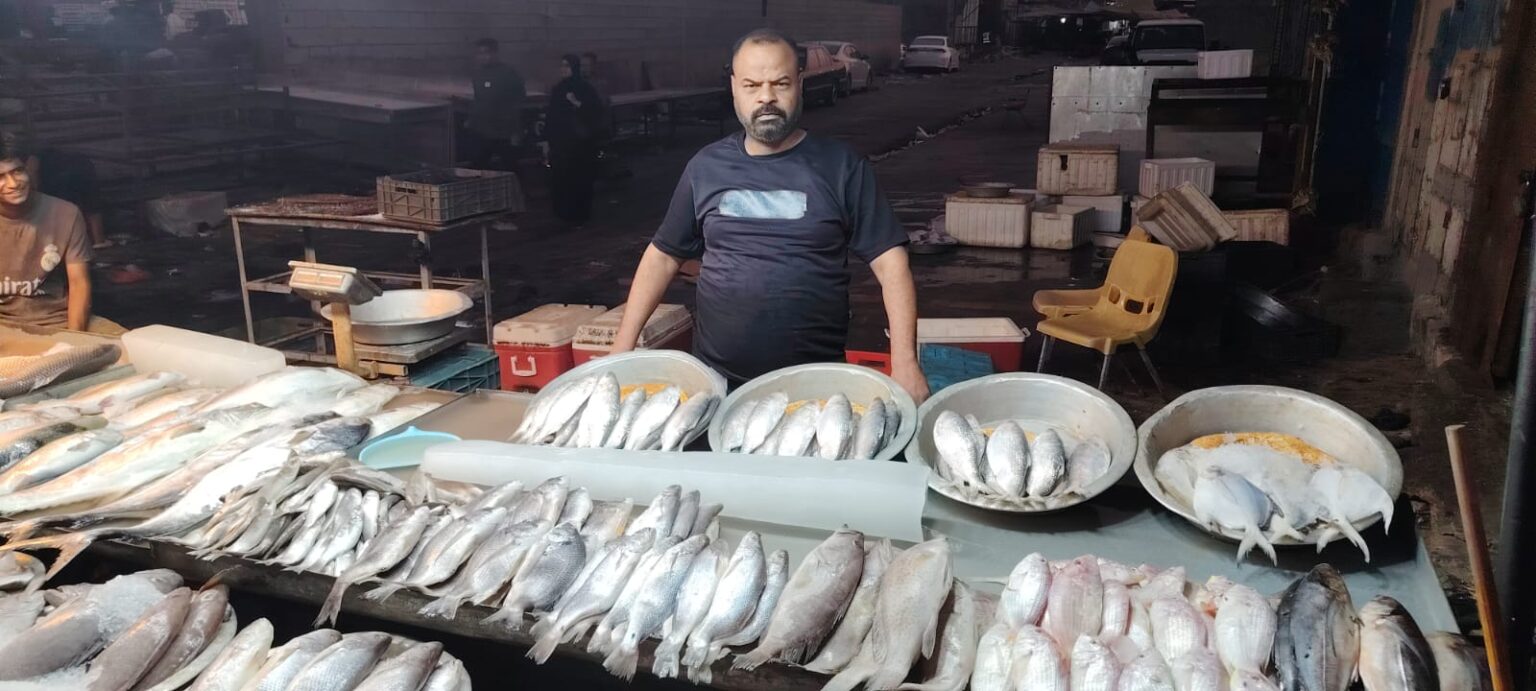
In Basra’s fish market, Mustafa Abu Ali holds up a small sbour. It is not the fish he remembers.
The big, heavy sbour that once crowded the market have become harder to find. Abu Ali, a 25-year-old fishmonger who works from 5 p.m. in the evening until 3 a.m. in the morning, has watched them disappear gradually, season by season.
A pair of large sbour can now fetch hundreds of thousands of Iraqi dinars. Abu Ali sold two such fish, each weighing about 3.5 kilograms, for around IQD400,000 ($257).
Smaller sbour cost less with a pair starting at about IQD15,000 ($10. Prices rise fast depending on size and quality.
Despite the prices, sbour remains a popular fish for locals.
“Many customers still look for it because it has been part of Basra’s table for generations,” Abu Ali says.
Sbour is part of culinary culture in southern Iraq. But these days putting a large fish on the family table is something of a luxury.
There are various reasons for the changes around sbour sales.
Abu Ali notes that, for fishermen here, fuel, labour and equipment are more expensive. For example, some fishing nets can cost around IQD10 million ($6,600), he says. After a week at sea, a fisherman might walk away with meagre earnings, just IQD100,000 ($66).
And then there are the fishing waters themselves. Regional tensions and sensitive maritime borders mean some fishermen hesitate to work in areas where they know fish gather but where the territory is near Iranian or Kuwaiti maritime borders or around military, port and oil installations.
Zainab Jawdat Musa from the marine sciences centre at the University of Basra adds that overfishing during the fish’s migration and breeding season has also contributed significantly to its decline in the fishing areas off Basra.
Fine-mesh nets can sweep up juvenile fish as well as females carrying eggs before they even have had a chance to reproduce.
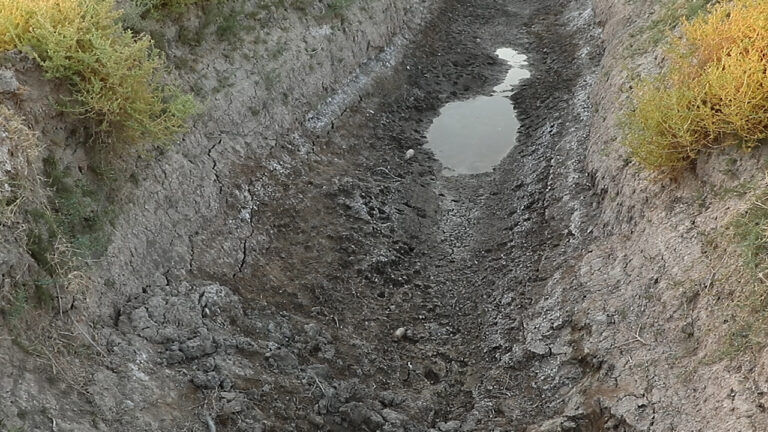
At the same time, there is less freshwater flowing down the Tigris and Euphrates rivers. This means saltwater from the Gulf can push farther into the Shatt al-Arab, which changes the fish’s hatching and nursery habitats.
Local environmental activist Jumaa al-Daraji notes that the sbour fish moves through a wide ecosystem, from the northern Gulf, Iraqi, Iranian and Kuwaiti coastal waters, the Shatt al-Arab and waterways connected to the marshes.
It also moves between marine and freshwater environments during its life cycle. The advance of saltwater doesn’t actually make the water “too salty” for the fish but it does make them change migration and reproduction patterns and can also impact the survival of their eggs.
Academic research would suggest that the sbour has actually been disappearing for decades now. A 2022 study by the University of Basra found that sbour made up about 90% of all fish consumed between 1965 and 1973. By 2020, that had fallen to around 6%.
Back at the fish market, customers still stop and ask about sbour. They inspect what is available, consider the size and hear the price. Some buy, others move on.
Fishmonger Abu Abdullah, 65 doesn’t need scientific research to see that things have changed. He remembers seeing much larger sbour for sale. It is clear to him that today, there are fewer of these fish and that they are smaller.
“When the large fish are available in our markets, they are expensive,” he says. “Not everyone can afford them.”
Your opinion on this topic is important to us, you can comment directly on our social media pages and you can contact us via email or WhatsApp.
Related articles