By Murtada al-Hudoud in Dhi Qar //
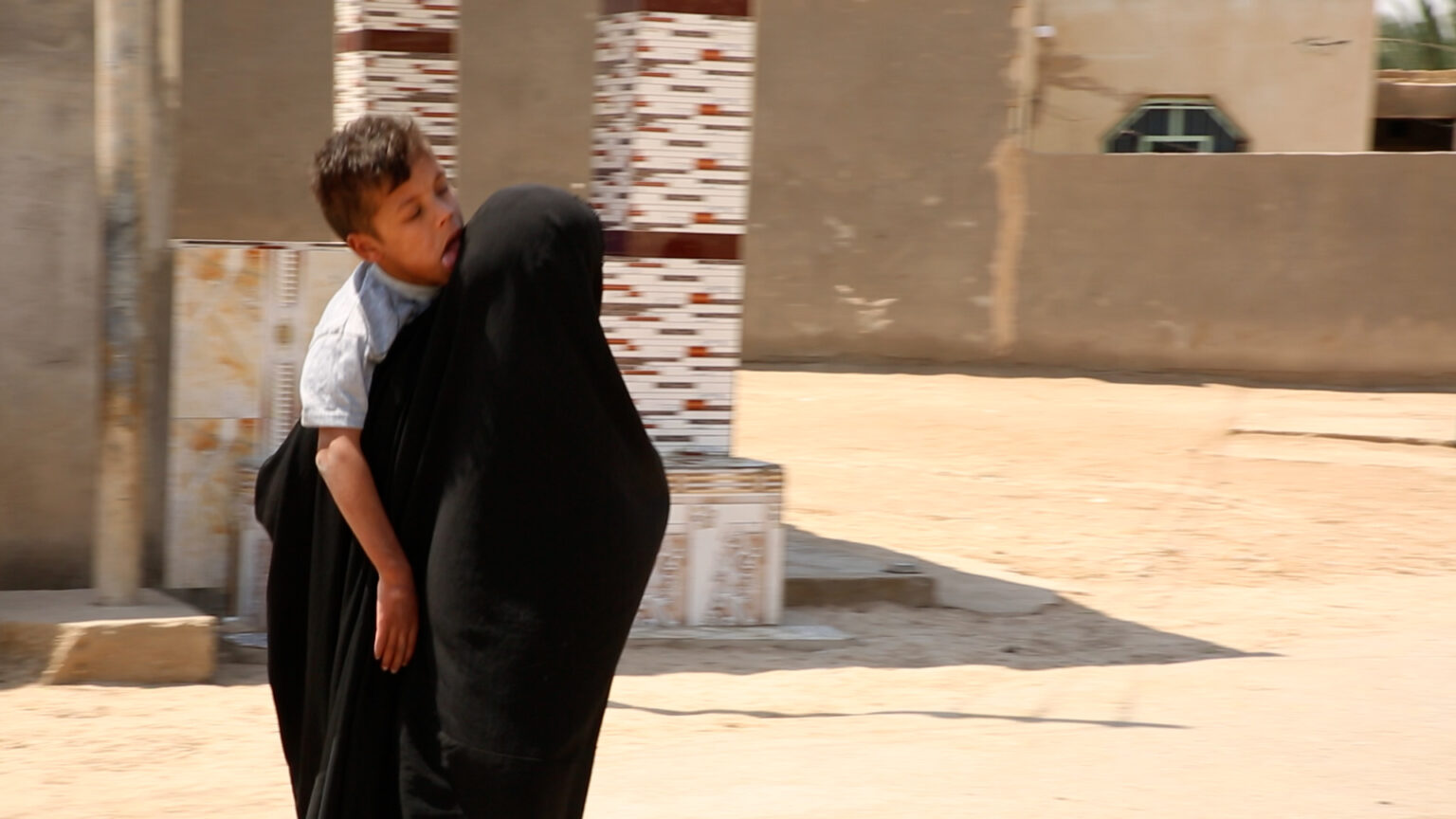
It feels like a nightmare at home, says Um Mohammed, an Iraqi woman who lives in the southern Iraqi city of Nasiriyah.
Since the US and Israel attacked Iran, sparking a regional conflict, neighboring Iraq has been impacted by things like fuel shortages and rising prices. Locals are worried the state, which has lost all-important oil revenues, won’t pay their salaries and there are strained conversations all around.
The same tensions are also reflected inside people’s homes. This is the case for 34-year-old Um Muhammad.
“My life has changed,” she says. “Since the war began, my husband — a civil servant — has grown increasingly anxious due to delays in his monthly salary. This was previously regular but is now being held back due to state budget issues. The war has made this situation even harder, it weighs on him, causes constant stress.”
Now, Um Mohammed says, he’s quick to lose his temper and she feels as though every discussion turns into an argument. “He has started hitting me for no reason,” she confesses.
The tension also affects their children, who become silent when their father returns home and seem afraid to move or make too much noise in his presence.
Um Muhammad is not the only woman having to deal with these kinds of stressful changes.
Um Sadiq, 36, lives on the outskirts of Nasiriyah and her husband has also been impacted by the conflict.
He works in construction and Um Sadiq explains that many people have postponed building projects due to the climate of uncertainty, preferring to save rather than spend money on building projects.
“My husband now finds work only one or two days each week, whereas he used to work six,” she says. “His income no longer exceeds IQD100,000 (US$76) and it just isn’t enough to meet our basic needs.”
Her husband is always at home now and spends a lot of time watching the news. He is becoming increasingly anxious, she notes. “With every change in prices, the situation at home deteriorates further,” she says. “When we hear news about the closure of the Strait of Hormuz or disruptions in oil exports, his behavior shifts noticeably as if the entire future is suddenly uncertain.”
Continuously watching the news and seeing images of people displaced in Lebanon also brings back painful memories from his own past in Iraq, she adds.
Muna Hassan’s husband is a taxi driver and, she says, “Every fuel crisis signals a difficult day ahead.”
Previously her husband worked full days driving his cab but now he often returns home after just two hours, frustrated because he has not earned more than IQD25,000 (around US$19).
“He returns preoccupied, bearing the weight of the situation, and when he speaks, he does so with visible agitation,” Hassan says.
She also feels as though watching the news all the time worsens the family’s anxiety.
“Whenever we hear about the Strait of Hormuz closing or oil exports halting, his expression shifts,” she says.
All the worries often translate into marital arguments, insults and shouting, she recounts. The worst is the impact all the fighting has on the couple’s daughter, Hassan says.
Activists and observers say the three women’s stories are not isolated incidents, they are part of a worrying trend that has been developing over the weeks of the Iran war.
Local organization, Communication and Unity, which is led by Ali al-Nashi, has statistics that confirm this. In 2025, there were 1,705 officially documented cases of domestic violence in Dhi Qar province but likely 2,000 further unreported cases from rural areas. The difference between what is reported to the police and what really happens is stark in Iraq, as elsewhere.
In 2026, 53 cases were reported in January, 74 in February and then 81 in March. The Iran war began in late February.
Economic hardship contributes to the issue in Dhi Qar, a province known for high poverty levels, al-Nashi explains. There are other challenges in the province which existed before the war, such as early or forced marriage, limited awareness among men and the lack of a culture that allows men to seek support or counseling, let alone a lack of counseling services. All those factors make the province particularly vulnerable to stressors like the Iranian war.
“The future is uncertain, salaries are inconsistent and concerns about rising prices prompt families to stockpile food,” al-Nashi says. “Although this behavior is intended as a protective measure, it can sometimes become a source of domestic conflict. Tension increases when one spouse requests more food supplies while the other cannot provide sufficient funds for that. This dynamic creates daily friction, often beginning with discussions and sometimes escalating to violence.”
Psychiatrist Ibrahim al-Sayegh, who works for the Dhi Qar health department, confirms that the Iran war is affecting local families in this way.
Men, in particular, have become more sensitive to everyday matters and less tolerant due to cumulative stress and uncertainty about the future, he observes. There is pressure to save money and to intervene in aspects of the household they might previously not have become involved in, such as meal preparation and groceries.
“This behavior arises from excessive worry about what the days ahead may hold — particularly fears about war or displacement and the anxiety these may bring,” al-Sayegh explains. “Families have fallen into a cycle of constant tension and disputes.”
According to the Iraqi Observatory for Human Rights, there were 36,289 cases of domestic violence officially documented in 2025. Of these, 19,587 incidents concerned husbands assaulting their wives. However these statistics are considered inaccurate as a lot of women don’t report domestic abuse in Iraq; the culture and social pressure discourage this.
This article is part of a series funded by the “Qarib” program, an initiative of the French Development Agency (AFD) and the French Agency for Media Development (CFI).
Your opinion on this topic is important to us, you can comment directly on our social media pages and you can contact us via email or WhatsApp.
Related articles